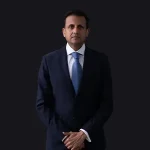
BINESH BABU PANICKER ASKS THE TOUGH QUESTIONS. UMAR BIN FAROOQ, FOUNDER & CEO OF ONE BROKER GROUP, ANSWERS SMARTLY.
In a market where everyone claims to be the biggest, the boldest, or the fastest, Umar Bin Farooq has quietly built One Broker Group into a powerhouse with numbers to prove it. He speaks with the clarity of someone who has seen Dubai real estate through every cycle — the dizzying highs, the crash of 2008, and the disciplined resurgence of today.
Buyers have evolved over the years. How about brokers? Have they evolved or are they still the same?
Today’s buyer is extremely educated. Ten to fifteen years ago there were only three or four major master developers; now around 1,500 drive more competitive products. People focus on lifestyle amenities, smart buildings and truly livable spaces. As buyers evolved, agents improved too. The market is extremely competitive. Agents must update themselves daily, learn about every new development and continuously upgrade their knowledge or risk becoming obsolete.
Many new agents enter real estate chasing easy money and fancy cars. What do you tell them?
Real estate can make you rich if you work hard, but it’s far from easy money. Only about 20 percent of agents earn what they consider “good money,” and that definition varies—from AED10,000–AED20,000 per month for some to AED100,000–AED200,000 for others. Success demands continuous investment in systems, training and staff education. You must earn every commission; luck has nothing to do with it.
What makes OBG different from other brokerages?
At One Broker Group we call ourselves master brokers— brokerage is the final step. Before that, we work with architects on asset mix, manage cash flows, run feasibility studies and advise on materials. We provide full back-end support to landowners and developers, so our role extends far beyond simply matching buyer and seller.
How does Dubai’s culture shape perceptions of brokers and buyers?
Dubai respects every profession and absorbs everyone into its ethos. Leadership here makes bold, humble decisions; that humility filters down. Respect is a core pillar—foul language is illegal, civility is natural. Institutions constantly improve, from RTA’s zero-accident days to five-minute property transfers at trustee offices. Luxury in Dubai is defined by ease of doing business and personal safety—walking the streets or doing deals without fear.
After 22 years in the market—almost as old as Dubai’s modern growth—have you noticed more respect or understanding from buyers?
Culture transforms us all. Clients from remote regions arrive with low expectations, then experience Dubai’s professionalism and respect. While isolated incidents occur, they don’t reflect the norm. Overall, buyers from every background now recognize the market’s maturity, transparency and high service standards, and they treat brokers accordingly.
If you could change one thing to improve the market, what would it be?
Agents need deeper knowledge and better customer-service skills. Brokerage firms must invest heavily in training and ongoing education. Just as Sheikh Zayed Road undergoes continuous upgrades, every professional must commit to daily improvement—learning about new developments, mastering regulations and refining service—to stay relevant in a rapidly evolving industry.
Should agents’ commissions be signed and recorded formally to avoid grey areas?
On resale deals, we use Form A from the seller, Form B from the buyer and Form F to define commissions. Trustees won’t process a transfer until the agent confirms payment. Off-plan commissions rely on developer agreements, but payment delays still happen. Dubai Land Department has established transparency, yet off-plan timelines need stronger enforcement. A clear regulatory mandate for timely payment would eliminate lingering grey areas.
What’s awaiting the market: a recession or a healthy correction?
Why do you think it will come? Are we doing something wrong? I don’t think so. . In 2024 Dubai Economic Department issued about 147,000 new business licenses versus roughly 35,000–40,000 annual property handovers, indicating a shortage. Rent increases reflect sustained demand from a population that’s grown from 1.6 million to around 4 million. These dynamics point to continued expansion rather than recession.
Compared to 2008, are the main players—developers and brokerages—overconfident or cautious?
Those who lived through 2008 are cautious and better informed. Authorities now require developers to pay for land in full and hold at least 30% of project value in escrow before construction. We all acknowledge the global economy’s interconnectedness and prepare for external shocks. Lessons from 2008 guide our conservative optimism today.
After 22 years, which company leads the brokerage fraternity?
By transaction volume and value recorded at Dubai Land Department, One Broker Group ranks number one. We also manage landmark projects on Marjan Island in Ras Al Khaimah. But for me, the real race is against myself: continuous self-improvement defines lasting success far more than any external ranking.