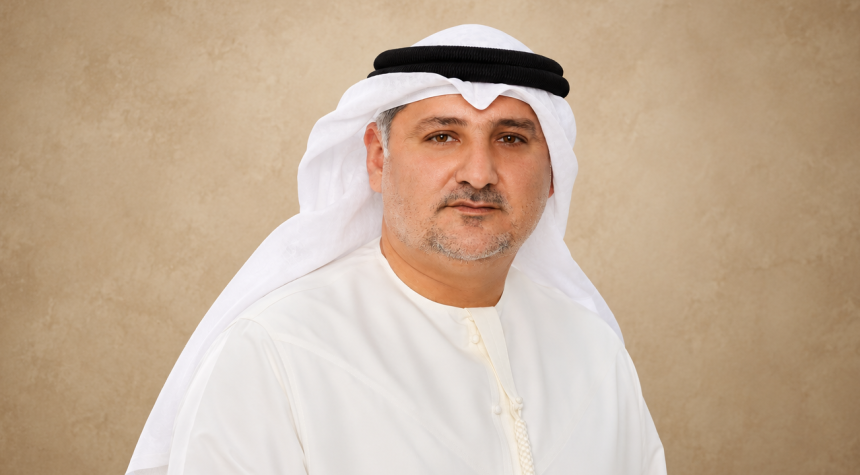
Fareed Aljanahi, Chief Executive Officer of AWR Properties, speaks to Binesh Babu Panicker about a more selective Dubai market, the changing meaning of “prime”, and why liveability now carries financial weight.
- Dubai’s growth in the first half of 2026 has largely reflected strong liquidity and capital inflows. How do you assess current market conditions?
- Why is a prime location no longer the sole deciding factor for end-users and investors?
- “Liveability” comes up often in market discussions. How has it evolved from a lifestyle preference into a financial metric?
- Off-plan still dominates the market, yet registrations have slowed noticeably. What does this tell us about buyer sentiment?
- Where does the UAE property market go from here, and how must developers and asset owners adapt?
Dubai’s property buyers have not gone anywhere, but they have become harder to win over. Sales passed AED286 billion in the first half of 2026, according to Dubai Land Department. Over the same period, 24,537 new homes were delivered, up 36% year-on-year. With more completed stock to choose from, buyers are asking tougher questions about developers, build quality and how communities are run.
In this interview, Fareed Aljanahi, Chief Executive Officer of AWR Properties, explains why he believes prime is no longer defined by location alone, why liveability is becoming something investors can underwrite, and what slower off-plan registrations really say about buyer sentiment.
KEY TAKEAWAYS
- Demand is intact. The market is getting more selective as supply rises.
- Where capital goes, not how much of it arrives, will define the next phase.
- “Prime” now means the whole proposition (quality, management, connectivity, value), not just the address.
- Liveability drives occupancy, renewals and rental resilience, which makes it a financial metric.
Slower off-plan registrations point to more demanding buyers, not weaker confidence.
Dubai’s growth in the first half of 2026 has largely reflected strong liquidity and capital inflows. How do you assess current market conditions?
Today, buyers are looking beyond the headline price. They want to understand the quality of the asset, the credibility of the developer, how the property will be managed, and whether it will still be desirable five or ten years from now. That is an important sign of maturity.
Dubai recorded more than AED286.44 billion in property sales in the first half of the year, so demand is clearly still there. The supply side also remains active. According to Dubai Land Department data, 104 projects were completed in H1, up 38.7% year-on-year, with their total investment value increasing by 52%. A further 24,537 new residential units were delivered, up 36%. What we are seeing is not an absence of demand, but a market that is becoming more selective as the volume of available stock increases.
The next phase will be defined less by the sheer volume of capital entering the market and more by where that capital is deployed. Buyers are becoming more disciplined, developers will have to become more disciplined in response, and ultimately that creates a stronger market. As more projects reach completion, buyers will also be able to compare assets more directly on what has actually been delivered, rather than on promise alone.
Buyers are becoming more disciplined, developers will have to become more disciplined in response, and ultimately that creates a stronger market.
Why is a prime location no longer the sole deciding factor for end-users and investors?
Location still matters, but the definition of what constitutes a prime asset has evolved significantly. Today, buyers are evaluating the complete proposition rather than simply the address. Build quality, design, amenities, connectivity and, crucially, the standard of ongoing property management are now central to the purchase decision.
The way price adjustments are playing out unevenly across Dubai is revealing. In July, for example, apartment values in Dubai Silicon Oasis were up 6% year-on-year and Dubai Sports City was up 5.4%, while some more central and luxury locations recorded declines. That does not mean location has become less important; it shows that a prestigious address alone does not guarantee performance. Buyers are increasingly looking at the overall proposition and asking whether the asset represents genuine long-term value.
We are also seeing buyers place greater emphasis on the seamless integration of location, service and technology. How effectively these elements work together increasingly determines an asset’s long-term appeal and performance.
Value for money has become another important factor. Buyers today have greater choice than they have had for many years and are often able to access larger homes, stronger amenities or better overall living experiences without necessarily choosing a traditionally prime address. As a result, prime is no longer defined solely by geography; it is increasingly defined by the quality of the overall offering.
“Liveability” comes up often in market discussions. How has it evolved from a lifestyle preference into a financial metric?
Liveability becomes financially meaningful when it starts to influence how people behave: whether they choose a community in the first place, how long they stay, whether they renew, and how resilient demand remains as more competing stock enters the market. For an asset owner or investor, those factors ultimately influence occupancy, recurring income and long-term asset value.
This is why liveability has moved beyond being a lifestyle consideration. A well-designed and well-managed community that provides the connectivity, amenities and everyday experience residents value has a stronger proposition in a market where buyers and tenants have increasing choice.
As the market matures, I expect liveability to become one of the primary metrics investors use to underwrite long-term value, alongside more traditional factors like location and yield.
From AWR Properties’ perspective, this is where long-term value is increasingly being created. The strongest communities will be those that are purposefully planned, well managed and able to adapt as resident expectations evolve. Connectivity, amenity access, technology-enabled operations and sustainability are no longer additional features; they are part of the core proposition that determines how a community performs over time. For asset owners, the quality of that lived experience therefore has direct commercial relevance, particularly in supporting occupancy, retention, rental resilience and long-term value.
As the market matures, I expect liveability to become one of the primary metrics investors use to underwrite long-term value.
Off-plan still dominates the market, yet registrations have slowed noticeably. What does this tell us about buyer sentiment?
Off-plan property still represents the majority of residential sales, but recent data suggests that the composition of demand is changing. In August, off-plan home registrations fell 10.8% month-on-month to 8,270, while sales of homes above AED5 million increased by 29.3%. I would not read too much into any single month, but the divergence is interesting: buyers have not disappeared, but capital appears to be becoming more selective.
I would be careful about interpreting slower off-plan activity as weaker confidence in Dubai. I see it more as evidence that buyers have become harder to convince.
There is still significant appetite for off-plan property, but the threshold for making a purchase is rising. Buyers want to understand who is behind a project, what they have delivered before, whether pricing is justified and what will differentiate the asset once it enters a larger pool of completed stock.
In my view, this is healthy. Strong markets should have demanding buyers. The projects that can answer those questions convincingly will continue to attract capital. Those relying primarily on market momentum may find the next phase more challenging.
Strong markets should have demanding buyers.
Where does the UAE property market go from here, and how must developers and asset owners adapt?
Looking forward, I believe resilience and discipline will define the UAE property market’s next phase. The country’s long-term fundamentals remain strong: population growth, infrastructure investment, economic diversification and a stable regulatory environment continue to support demand. What has changed is how success will be measured. It will be less about broad-based appreciation and more about the quality of individual assets, communities and long-term investment strategies.
For developers and asset owners, that means recognising that operational excellence, recurring income, tenant experience and genuine liveability are no longer nice-to-haves. They are becoming increasingly important drivers of long-term value.
A more selective market is ultimately a positive development. It reduces the extent to which assets can rely on market momentum alone and rewards developers and owners that take a longer-term view. That creates a more sustainable foundation for the UAE property market and strengthens its ability to attract global capital and talent over the long term.
BY THE NUMBERS
| Figure | What it measures | Source |
| AED286.44bn | Dubai property sales, H1 2026 | Dubai Land Department |
| 104 (+38.7%) | Projects completed, H1 2026 vs H1 2025 | Dubai Land Department |
| AED111bn (+52%) | Investment value of completed projects, H1 2026 | Dubai Land Department |
| 24,537 (+36%) | New residential units delivered, H1 2026 | Dubai Land Department |
| +6% / +5.4% | Apartment values, Dubai Silicon Oasis / Dubai Sports City, July 2026 YoY | ValuStrat |
| −19% / −15.1% | Apartment values, Burj Khalifa / JBR, July 2026 YoY | ValuStrat |
| 8,270 (−10.8%) | Off-plan registrations, August 2026 vs July | DLD data via Projectory |
| +29.3% | Sales of homes above AED5m, August 2026 vs July | DLD data via Projectory |