BOUBKER BENJELLOUN, FOUNDER OF ARCHITECTURE FIRM BENJELLOUN & PARTNERS THAT IS BEHIND TWO OF DUBAI’S ICONIC LANDMARKS – COMO RESIDENCES ON PALM JUMEIRAH AND SOLARA TOWER IN DOWNTOWN DUBAI – BELIEVES INNOVATION IS NOT JUST ABOUT HEIGHT OR SPECTACLE BUT ABOUT RESPONSIBILITY
Long before he was transforming city skylines and redefining luxury real estate, Boubker Benjelloun was making waves, quite literally. A national-level swimmer, the Moroccan spent his early years slicing through water with determination. But even as he trained with single-minded focus, another world quietly took shape in his imagination – one of soaring structures, elegant forms, and vibrant urban spaces.
That duality – physical discipline and boundless vision – would become the cornerstone of his remarkable career.
After an early detour into dentistry to fulfill family expectations, Boubker found his true calling in architecture and urban development. From a lucky first investment in Morocco to helming mega-projects in Dubai and beyond, his journey is a masterclass in reinvention, resilience, and ambition.
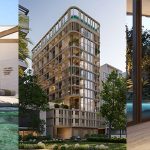
Today Boubker Benjelloun is the founder of Benjelloun & Partners, the architecture studio behind two of Dubai’s iconic landmarks: COMO Residences on Palm Jumeirah and the Innovation Award-winning Solara Tower in Downtown Dubai.
Known for his bold, sculptural design language, Boubker approaches architecture as both an artistic expression and a human experience shaping buildings that resonate beyond their physical form. His influence continues to expand including the visionary concept design for Meta Stadium in Dubai, set to become the world’s largest stadium by capacity.
Whether designing luxury spaces or leading philanthropic efforts, Boubker builds with intent: to inspire, uplift, and leave a legacy shaped by both purpose and humanity.
Excerpts from an interview:
How do you balance innovation with sustainability and human-centric design when working on large-scale developments in a fast-growing city like Dubai?
Innovation is not just about height or spectacle, it’s about responsibility. We constantly ask ourselves: How does this design serve its community? In a city like Dubai, it’s vital to weave in sustainability, natural integration, and social intention. Every structure must respond not only to its environment, but to the people who will live and move through it for decades to come.
Much of your work focuses on creating “resilient urban ecosystems.” What does that look like in practice in a place like Dubai?
Resilience means creating urban environments that evolve gracefully with time. In practice, that looks like layered uses – pedestrian-friendly layouts, integration of renewable energy, and thoughtful landscaping that brings comfort to harsh climates. Dubai is rapidly expanding, so building resilience means planning with foresight not just for today’s residents, but for generations to come.
Tell us about a particular project in Dubai that best reflects your design ethos and values.
COMO Residences is a perfect example. It’s a vertical sculpture, bold, expressive, yet deeply livable. The decision to build a massive structural arch at its base was met with resistance at first, but I insisted. That arch wasn’t just design; it was storytelling, flow, movement. The result speaks for itself, not only in terms of architectural presence but in the way it emotionally anchors the building. It’s not just a tower; it’s a symbol of intuitive design meeting determination.
You often speak of the ’emotional journey’ of the user in architectural spaces. How do you bring that sense of emotion and connectivity into high-rise buildings, mixed-use communities, or commercial hubs?
Emotion is the essence of memory. You might forget a layout, but you never forget how a place made you feel. I design with that in mind — focusing on light, spatial rhythm, materiality, and transitions. Whether it’s a quiet corridor above the city or a sun-drenched courtyard between towers, every detail contributes to a silent emotional script that users carry with them.
From a design and functionality standpoint, what do you think the next generation of property developments in the UAE will demand?
The future is modular, conscious, and deeply flexible. We’re moving into an era where buildings must adapt — to climate, to tech, and to lifestyle shifts. At Benjelloun & Partners, we’re embracing future-ready systems, circular design principles, and environments that foster community. The new generation of property isn’t just built; it’s choreographed for evolving human needs.
How have diverse cultural influences shaped your design language and development approach?
Cultural diversity taught me humility in design. I’ve lived in places where silence shapes architecture, and others where ornament is a language of pride. These contrasts helped me understand that architecture must listen before it speaks. My design language is not academic; it’s intuitive. I didn’t come to this field through formal certification, but through a deep need to build, to serve, to give form to human stories.
In what ways do you see architecture as a tool for social transformation in the UAE, beyond just aesthetics and function?
Architecture is one of the most visible forms of leadership. It shapes how people interact, how they aspire, and how they feel about their place in the world. In the UAE, where rapid change is the norm, architects have a duty to design for cohesion, not just iconography. We can create spaces that invite inclusion, dignity, and collective pride. That’s where transformation begins.
You’ve mentioned the importance of ‘creating harmony’ through architecture. In a city known for iconic individualism, how do you ensure coherence and community in your developments?
Harmony doesn’t cancel out individuality. If anything, it frames it. We design with respect for context, flow, and rhythm. Every tower, every plaza, every facade must speak not only for itself but to its surroundings. It’s about stitching buildings into the fabric of daily life, not isolating them. True community emerges when design listens as much as it expresses.
Tell us a little about your philanthropic arm and the work you are doing for less privileged communities.
Through The B. Foundation, we focus on building long-term infrastructure in underserved regions: from schools to irrigation systems and housing. Our goal is not temporary aid, but sustainable transformation. We partner with local communities to create solutions that are culturally relevant and self-sustaining. It’s an extension of my belief that architecture, at its core, is about service. And that real success is measured by the lives we help rebuild.
Finally, what advice would you give to young architects and designers coming up in the region who are trying to find meaning in a world driven by speed, spectacle, and scale?
Slow down. The most powerful structures in the world are not always the tallest. They’re the ones that stand the test of meaning. Don’t be afraid to question trends. Design from your gut. Build with your conscience. This region needs architects who see beyond the skyline; who understand that architecture, at its best, is a silent act of care.