In the UAE, and particularly in Dubai, the shoreline is no longer the edge of the city. It is increasingly where the future of urban living is being written. As waterfront communities mature into fully fledged neighbourhoods, island living has emerged as one of the city’s most resilient and consistently outperforming residential segments, not as a fleeting lifestyle trend, but as a carefully planned response to how people want to live, invest, and belong.
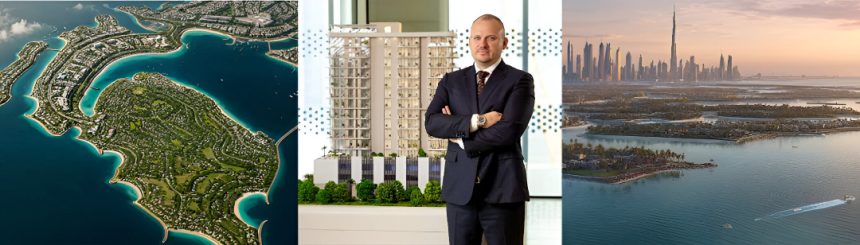
“Dubai’s evolution into a truly global city has fundamentally redefined the meaning of luxury and lifestyle,” says Oleg Tkachenko, Managing Director of CDS Developments. With over 15 years of experience across real estate, trading, and hospitality in international markets, Tkachenko brings a strategic, long-term lens to the city’s changing residential landscape. “Once perceived simply as symbols of exclusivity, island and waterfront residences have matured into holistic lifestyle destinations, offering a rare fusion of privacy, wellbeing, and seamless connectivity,” he says.
Limited coastal land, controlled supply, and consistently strong rental demand have long given waterfront homes a structural advantage. What distinguishes today’s island developments, however, is the depth of planning behind them.
“Waterfront and island master communities present inherent value drivers; from the limited supply of premium coastal land to consistently strong rental returns and sustained capital appreciation,” Tkachenko explains. “When combined with thoughtful urban design, lifestyle-focused amenities, and human-centred planning, these destinations continue to attract demand even during broader market fluctuations.”
Dubai Islands has emerged as a clear example of this evolution. Strong off-plan absorption rates and growing investor confidence underline how quality-led, lifestyle-focused developments are outperforming more conventional residential offerings even as broader markets cycle.
Yet the outperformance is no longer purely financial. Buyers are voting with both their feet and their capital for environments that enhance daily life.
“Buyers and investors today are not only seeking real estate with strong capital appreciation potential; they want enriched living experiences,” Tkachenko says. “They value thoughtful design, access to nature, waterfront promenades, recreational facilities, and meaningful lifestyle integration that supports health, family connections, and community engagement.
“In this new paradigm of urban luxury, the waterfront is not simply an address; it’s a way of living.”
Reimagining island living for a global city
Historically, island living evoked images of retreat – beautiful, but often detached from the rhythms of everyday urban life. Dubai has reinterpreted that idea to suit a fastgrowing, globally connected metropolis.
“Dubai has elevated island living from a once-remote escape into a fully integrated urban lifestyle,” Tkachenko notes. “Today’s developments are deliberately planned to provide seamless access to the city; with bridges, road networks, marinas, and transit links that connect residents easily to business districts, leisure destinations, and cultural hubs.”
Rather than functioning as isolated enclaves, these communities are designed as extensions of the city itself.
“At the same time, these communities preserve the hallmarks of exclusive coastal living: privacy, expansive sea views, and a sense of retreat,” he adds. “The value proposition lies in this balance; residents can unwind in serene surroundings while remaining close to work, entertainment, and global city energy.”
Beyond postcard views and iconic design, today’s homeowners and investors are increasingly values-driven in how they choose where to live.
“Modern buyers are increasingly seeking … an environment that supports wellbeing, security, convenience, and meaningful connection,” Tkachenko explains. Proximity to nature has become a defining differentiator. Walkable neighbourhoods, landscaped parks, waterfront promenades, and leisure facilities are now shaping purchasing decisions across demographics. “These amenities aren’t lifestyle luxuries anymore; they are core expectations for long-term liveability.”
Investors, too, are looking further ahead. “They prioritize developments designed for resilience, steady rental performance, and future demand,” he says, “favouring properties that combine lifestyle appeal with strong, sustainable financial returns.”
How Dubai compares globally While mature island destinations such as Miami, Singapore, and parts of the Mediterranean have long benefited from coastal appeal, Tkachenko believes Dubai stands apart in its scale and long-term intent.
“Dubai’s approach to master-planned island developments stands in a league of its own,” he says. “Rather than simply building coastal residences, the city envisions entire ecosystems designed for long-term living.”
This philosophy is reflected in how developers approach execution. “Developers such as CDS embody this philosophy by prioritizing fewer, but more refined, projects,” Tkachenko explains. “Their focus on meticulous craftsmanship, durable materials, and future-proof design ensures that each community is built not only for immediate luxury, but for lasting value.”
The rise of island living signals a broader shift in Dubai’s urban strategy-one that prioritises lifestyleled growth over density alone.
“The rising demand for waterfront and island living signals a broader shift toward lifestyle-led urban development,” Tkachenko says. “Dubai is moving beyond traditional commercial clusters and high-density residential models, choosing instead to prioritise long-term liveability, sustainable value creation, and community wellbeing.”