Once known primarily for its affordable residential offering, International City Phase 2 is now attracting growing interest from investors seeking rental income and relatively accessible entry points.
Where buyers are looking
Bayut’s H1 2026 Dubai Sales Market Report identified the area, also known as Warsan 4, among the most popular communities for affordable off-plan apartments during the first half of the year. The report recorded an average advertised price of AED 867,000 for off-plan apartments in the area, placing it alongside Dubai South and Dubai Investment Park among the affordable locations attracting buyer interest.
International City has long occupied a value-oriented position within Dubai’s residential market, and a combination of rental demand, new development activity and planned infrastructure is now bringing renewed focus to the wider area.
Tomorrow World expands into Phase 2
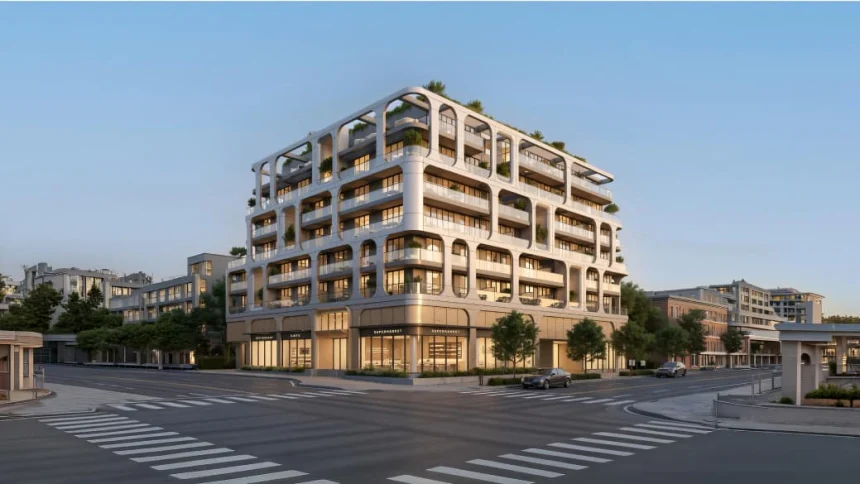
Developers are already taking note. Tomorrow World Properties is expanding into the area, a move that comes as investor interest extends beyond some of the emirate’s more established residential hotspots. For the developer, the appeal of Phase 2 reflects a broader shift in how investors are assessing Dubai’s residential market.
Xu Ma, Founder and Chairman of Tomorrow World Properties, said: “International City Phase 2 represents the kind of opportunity we believe is increasingly relevant to today’s investor: a location where affordability, rental demand and future infrastructure can come together. Our focus is on creating a project that responds to what buyers and residents are looking for today, while also considering how the area is likely to evolve.”
The rental case
The rental fundamentals provide part of that rationale. Bayut’s H1 2026 data puts the projected rental ROI for apartments across International City at 8.79%, making it one of the higher-yielding affordable apartment locations tracked in the report. Discovery Gardens recorded 9.06%, while Dubai Silicon Oasis recorded 8.23%.
The 8.79% figure applies to International City as a whole and should not be read as a projected return for Phase 2 or for any individual development. Bayut also notes that projected ROI can vary according to factors including the building, unit, developer and amenities.
Rental performance has also remained active. Bayut’s H1 2026 Dubai Rental Market Report recorded a 4.25% increase in overall rents in International City, with demand particularly evident for studios and one-bedroom apartments.
The Blue Line connection
Connectivity is the other consideration. The Dubai Metro Blue Line is under construction and is scheduled to open on 9 September 2029. The 30-kilometre line will include 14 stations and connect International City with areas including Dubai Creek Harbour, Dubai Silicon Oasis and Academic City, while also linking with the existing Red and Green lines. International City 1 will serve as an interchange station, with the route continuing towards International City 2 and 3.
Construction reached 20% completion by May 2026, according to Dubai’s Roads and Transport Authority, and is expected to reach 30% by the end of the year. The authority says the line will serve nine key districts with a projected population of around one million under the Dubai 2040 Urban Master Plan.
For developers, infrastructure of this scale adds another dimension to decisions around emerging residential districts. While future connectivity does not guarantee property or rental performance, it can influence how a location is perceived by both residents and investors as the surrounding urban network develops.
A more discerning investor
Xu Ma said: “We are seeing investors become more discerning about location. It is no longer simply about finding the lowest entry price. Buyers are looking at the relationship between affordability, rental demand, amenities and the infrastructure that will shape a community over the longer term.”
|
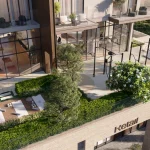
That thinking is reflected in Tomorrow World’s approach to its International City Phase 2 project, which aims to combine residential accommodation with amenities and services designed around the needs of its target residents.
The strategy also reflects a wider evolution in Dubai’s residential market. As established districts continue to attract strong demand, investors are increasingly looking at emerging areas where development, infrastructure and population growth are expected to reshape the surrounding landscape.
The next layer of residential demand
Xu Ma added: “International City Phase 2 is at an interesting stage in its development. Our objective is to contribute to that evolution by delivering a project that offers residents a well-considered living environment and gives investors a product aligned with the fundamentals of the location.”
For Tomorrow World, the expansion is less about moving away from Dubai’s established investment districts and more about looking at where the next layer of residential demand is developing. With rental activity already established and major transport infrastructure under construction, International City Phase 2 is increasingly part of that conversation.